Quick answer
A compression wear manufacturer should understand controlled stretch, recovery, body mapping, seam strength, size grading, and performance fit. The goal is to create garments that feel supportive without restricting movement. Buyers should evaluate fabric modulus, pattern tension, flat seams, measurement tolerance, wearer comfort, and QC testing. Shunwang manufactures high-end knitted activewear, including compression wear, yoga wear, swimwear, cycling wear, combat sportswear, and plus-size series.
What compression wear means in apparel manufacturing
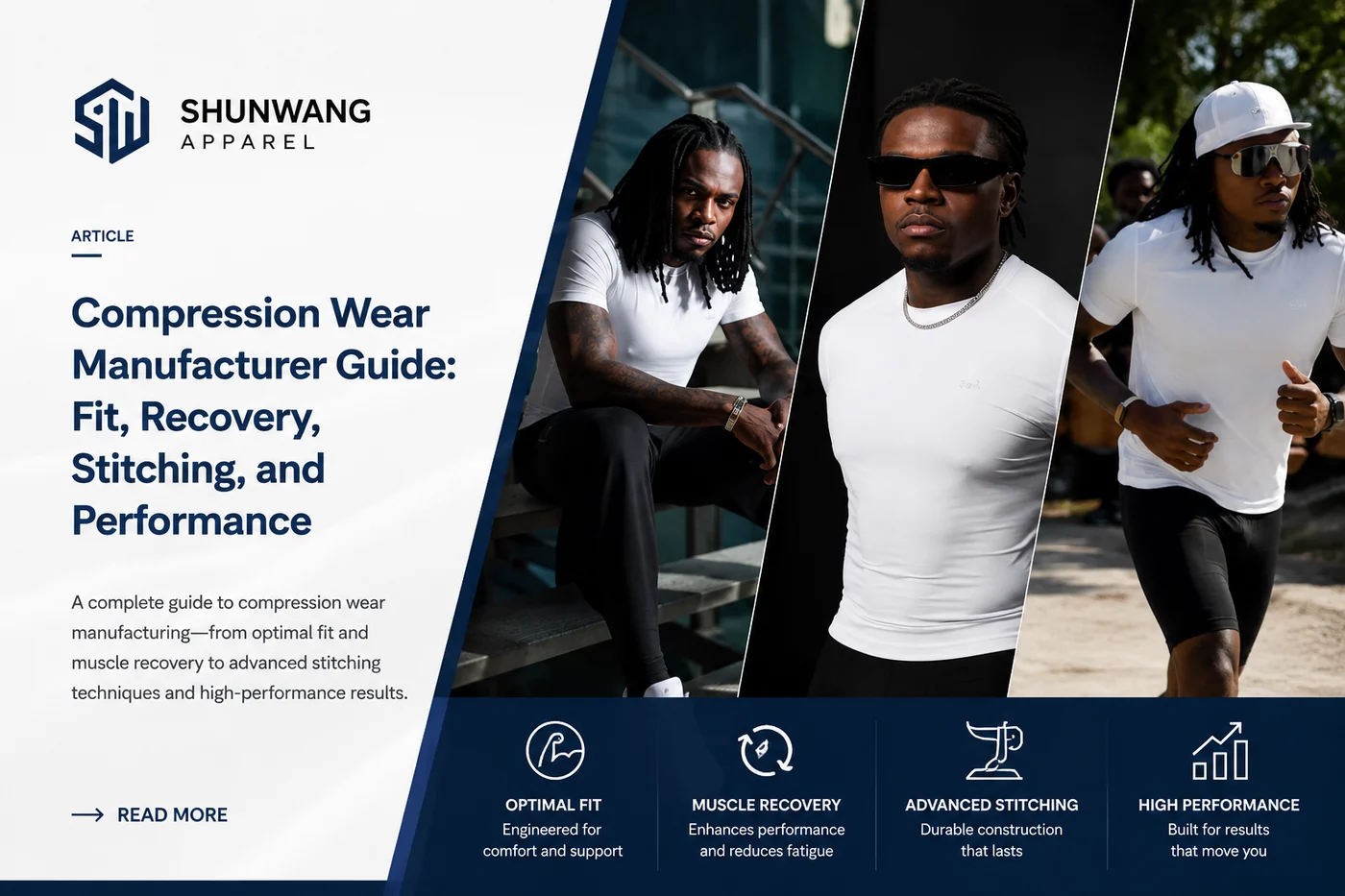
Compression wear includes tight-fitting tops, leggings, shorts, base layers, rash guards, training shirts, and performance sets. In sports apparel, compression usually refers to a supportive fit created through fabric stretch, pattern shape, and seam placement. It should not be confused with medical compression unless the product is specifically developed and tested for that purpose.
For brands, the manufacturing challenge is balance. The garment must feel supportive, but not painful. It must stretch during training, but return after use. It must fit close to the body, but allow breathing, bending, lifting, and running.
Fabric factors for compression apparel
- Stretch ratio: How far the fabric stretches in width and length.
- Recovery: How well the fabric returns after repeated pulling.
- Modulus: How firm or resistant the fabric feels under stretch.
- Moisture management: How the fabric handles sweat during training.
- Hand feel: Compression should not feel rough or irritating.
- Opacity: Leggings and shorts must not become transparent.
- Durability: Fabric should resist pilling, deformation, and seam stress.
Pattern and fit control
Compression fit is not created by choosing a smaller size. It requires a pattern that controls tension in different body zones. The chest, shoulder, waist, hip, thigh, knee, and calf do not need the same pressure. A good manufacturer understands how pattern pieces, fabric direction, and seam placement affect comfort and performance.
Size grading is also important. A compression shirt may fit well in size M but feel too tight in XL if grading is not adjusted properly. For plus size compression or inclusive activewear, the factory should test key measurements and fit points across multiple sizes.
Stitching and construction
Compression garments are under constant tension, so seams must stretch and recover. Flatlock seams are often used for comfort and reduced bulk, but the best seam depends on design, fabric, and production equipment. Stitch length, needle choice, thread, and machine tension should be controlled to prevent seam popping or fabric damage.
Buyers should inspect stress points such as underarms, crotch, waistbands, leg openings, necklines, and cuffs. Logos and prints should also be tested after stretch, because cracking or distortion can damage the brand image.
QC checklist for compression wear
| QC item | Reason |
|---|---|
| Measurement under tolerance | Compression fit depends on precise dimensions. |
| Stretch seam test | Seams must hold under movement and repeated wear. |
| Fabric recovery check | Garments should not bag out after stretching. |
| Opacity test | Especially important for leggings, shorts, and light colors. |
| Comfort review | Compression should support without restricting movement. |
| Logo and print stretch | Artwork should not crack, peel, or distort excessively. |
Why Shunwang is a practical compression wear partner
Shunwang's focus on high-end knitted activewear makes it suitable for compression apparel development. The factory's experience across yoga wear, swimwear, cycling wear, combat sportswear, and plus-size series provides a strong foundation for products that require stretch, recovery, body fit, and sewing control.
Buyers can approach Shunwang with compression shirts, leggings, shorts, rash guards, base layers, or training sets. The team can review product requirements and suggest a sampling path based on fabric, fit, and order size.
FAQ
What is the difference between compression wear and regular activewear?
Compression wear usually has a closer, more supportive fit created through fabric resistance, pattern design, and seam placement. Regular activewear may prioritize comfort and movement without controlled compression.
Can Shunwang manufacture compression shirts and leggings?
Yes. Shunwang's product focus includes compression wear and other stretch-based sportswear categories.
What should I test in compression apparel?
Test stretch, recovery, opacity, seam strength, measurement tolerance, comfort, and logo durability after stretching.
Is sports compression the same as medical compression?
No. Sports compression apparel is generally performance or support clothing. Medical compression requires specific standards, testing, and regulatory considerations.
Start your OEM/ODM project
Need a compression wear manufacturer for training apparel, base layers, rash guards, or leggings? Send Shunwang your tech pack, target fit, fabric requirement, size range, and order quantity for a project review.